
![[HERO] Finding Your Center: How to Mellow Out After a Tough Call (While Still on Shift)](https://cdn.marblism.com/wcqwtGZNauD.webp)
Look, we're not going to sugarcoat it. You just cleared from a call that had your adrenaline through the roof. Maybe it was a traumatic injury, a kid involved, or a scene that hit too close to home. And now? You've got to reset, refocus, and be ready for the next tone. Because that's the job, right?
But here's what nobody tells you in the academy: you can't just flip a switch and go from high-stress to baseline in thirty seconds. Your body doesn't work like that, and your mind sure as hell doesn't either.
So let's talk about some real, practical ways to bring yourself back down during your shift, no fancy therapy office required, no long lunch breaks (because when do we ever get those?). Just tools you can use in the rig, in the bay, or behind the station.
Box Breathing: Your Tactical Reset Button
You've probably heard about "tactical breathing" or "box breathing" before. If you rolled your eyes the first time someone mentioned it, you're not alone. But stick with me here, this stuff actually works, and it's backed by science.
Here's why it matters: When you're in fight-or-flight mode, your sympathetic nervous system is running the show. Your heart's pounding, your breathing is shallow and fast, and your body is ready to throw down or bolt. Box breathing activates your parasympathetic nervous system, the brake pedal that tells your body, "Hey, we're good. Stand down."
Here's how to do it:
- Breathe in through your nose for 4 counts
- Hold for 4 counts
- Exhale through your mouth for 4 counts
- Hold again for 4 counts
- Repeat for 3-5 rounds
That's it. You can do this sitting in the rig after a call, standing in the apparatus bay, or even in the bathroom if you need a minute alone. No one needs to know what you're doing, you're just breathing, and it's giving your nervous system permission to downshift.
The Power of the Microbreak
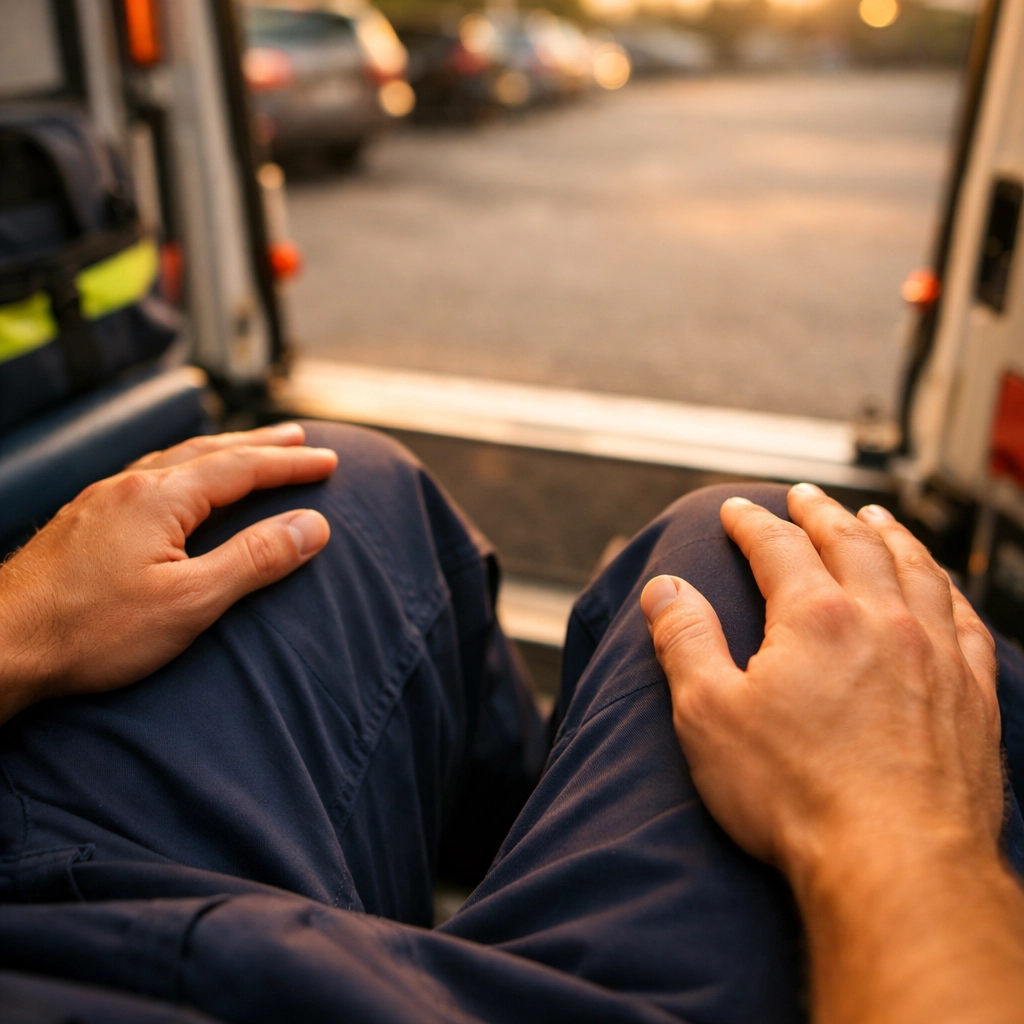
Let's be honest, you're not getting a 30-minute meditation session in the middle of a 24-hour shift. But you know what you can steal? Two to three minutes. That's your microbreak.
The concept is simple: intentionally disconnect from the chaos, even if it's just for a moment. After a rough call, give yourself permission to step away mentally before you have to step back in physically.
Here are some microbreak moves that actually work:
- Step outside for 90 seconds – Fresh air hits different. Let your eyes focus on something far away (the horizon, a tree, whatever). It signals to your brain that you're not in immediate danger anymore.
- Splash cold water on your face and wrists – This is an old trick, but it works. The cold water activates your vagus nerve, which helps regulate your stress response.
- Put on a song – Got earbuds? One song can shift your entire state. Pick something that grounds you, whether it's heavy metal or acoustic.
The point isn't to forget what just happened. It's to create a tiny buffer between the trauma and the next call. You're not shutting down, you're resetting.
Get Physical: Grounding Through Movement
Your body just went through a full stress response. Your muscles tensed up, your jaw clenched, your shoulders crept up to your ears. All that tension is still sitting in your body, and if you don't move it, it's going to keep you wired.
You don't need a full workout, just some intentional movement to shake things loose.
Quick grounding exercises you can do anywhere:
- Shoulder rolls and neck stretches – Roll your shoulders back ten times, then stretch your neck side to side. Feel where you're holding tension and breathe into it.
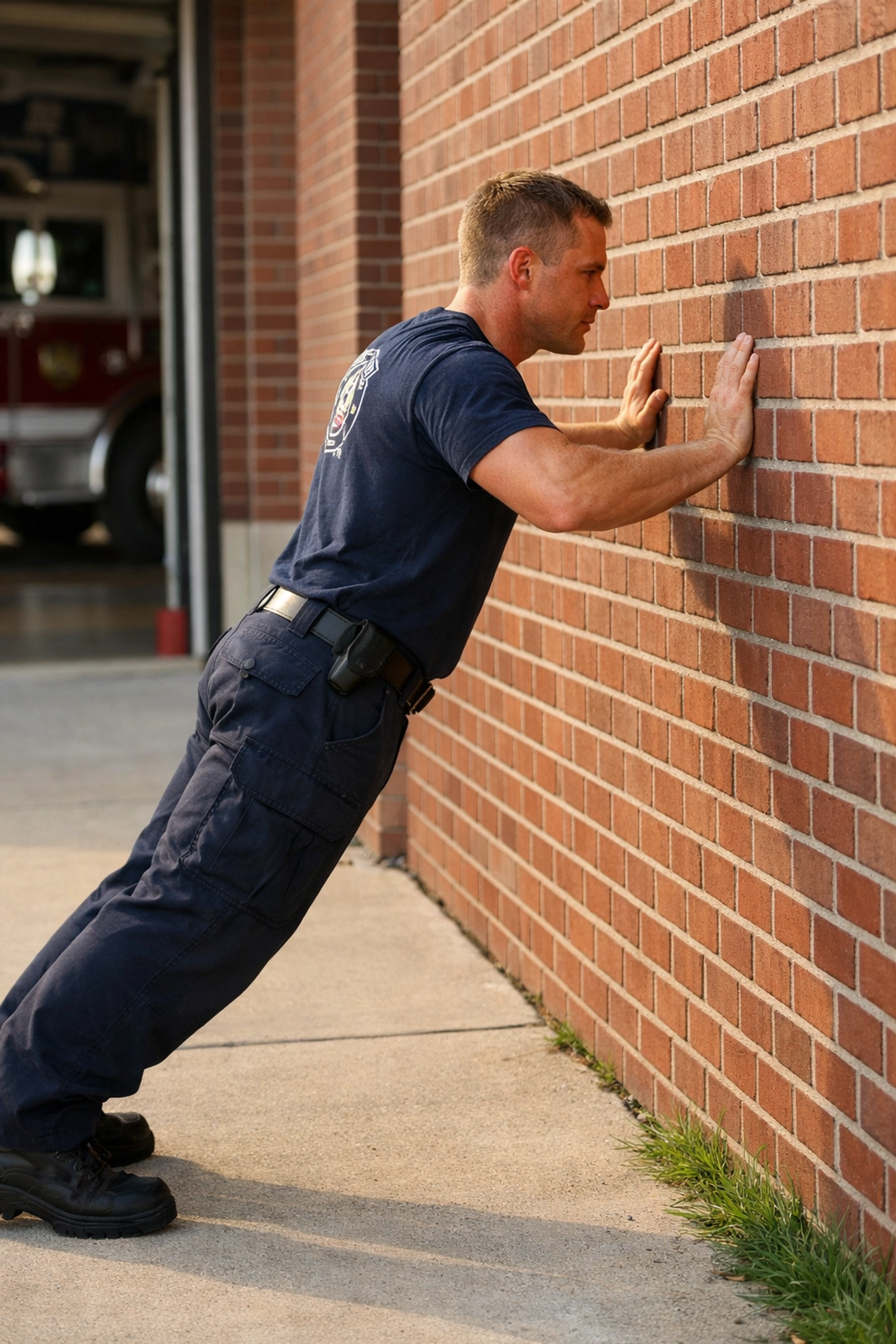
- Wall push-ups or squats – Do 10-15 reps. Physical exertion helps burn off that residual adrenaline and gives your mind something else to focus on.
- Progressive muscle relaxation – Tense and release muscle groups one at a time, starting with your fists and working up to your shoulders. Squeeze for 5 seconds, then let go completely.
- Grounding through your feet – Stand up, press your feet firmly into the ground, and focus on the sensation. Feel the floor beneath you. This literally "grounds" you back into the present moment.
Movement doesn't just release tension, it reminds your body that you're safe right now. That the threat has passed. That you're here, in the station, and you're okay.
Check In with Your Crew
Here's something we don't talk about enough: your crew is going through it too. If the call was heavy for you, chances are it hit them the same way. And sometimes, the best way to decompress is together.
You don't have to launch into some deep therapy session in the day room. But a simple check-in goes a long way:
- "That one was rough. You good?"
- "I need a minute. Anyone else?"
- "Let's grab coffee and just sit for a second."
There's power in acknowledgment. When you say out loud, "Yeah, that sucked," you're validating what everyone else is feeling. You're giving permission for the whole crew to exhale. And you're reminding each other that none of you are carrying this alone.
Sometimes, humor is the pressure valve. A dark joke, a shared look, a collective exhale: it's not about minimizing what happened. It's about staying connected to the people who get it. Because they do. They were right there with you.
When the Shift Isn't Enough
Here's the reality: sometimes, the breathing techniques and microbreaks aren't enough. Sometimes, the calls pile up, and the stuff you're carrying gets heavier than you can shake off between tones. And that's okay.
If you're finding that you can't reset anymore—if you're going home and the scenes are replaying, if you're not sleeping, if you're snapping at people you love—that's not weakness. That's your system saying it needs more support.
If you’re in immediate crisis
I want to be super clear and supportive here:
- If you need immediate help, call or text 988 (Suicide & Crisis Lifeline).
- If you or someone else is in immediate danger, call 911.
Where OCF fits in
Think of OCF as a bridge: we help you get connected to the right level of professional care, and we walk with you as you move from “just surviving” to real, long-term recovery.
At Outer Circle Foundation, we’re here for you—first responders who run toward the danger while everyone else runs away. We get how this job rewires your nervous system, your sleep, your relationships… all of it.
Here’s how we can help long-term:
- Our flagship option is the 12-week Reboot Trauma Recovery program
- Additional mental health resources and community support so you’re not carrying it alone
- If you’re not sure where to start, reach out—we’ll help point you to the next right step
Your Takeaway
You can't control the calls that come in. You can't unsee what you've seen or unfeel what you've felt. But you can control how you respond to your own nervous system in the aftermath.
Box breathing gives you a physiological reset. Microbreaks create mental space. Movement releases physical tension. And checking in with your crew reminds you that you're not alone.
These aren't magic fixes: they're tools. And like any tool in your kit, they work best when you actually use them.
So next time you clear from a tough one and you've still got hours left on your shift, try one of these. Give yourself permission to take two minutes. Your body and your mind will thank you.
And if you need more than two minutes: if you need real support that goes beyond a shift: we're here. Always.
Stay safe out there. And remember: taking care of yourself isn't selfish. It's how you keep showing up for everyone else.