The Long Game: Why Your Transition Sets the Stage for the Next 20 Years
![[HERO] The Long Game: Why Your Transition Sets the Stage for the Next 20 Years](https://cdn.marblism.com/Tj_9TpiAsa6.webp)
Here's something most people don't tell you when you're getting ready to transition out: the way you land in the first 12–24 months doesn't just affect your first civilian job. It sets the trajectory for the next two decades of your life.
That's not motivational fluff. That's data.
In January 2026, researchers from VA Boston and Boston University published a study in Social Psychiatry and Psychiatric Epidemiology that tracked 9,500+ veterans over multiple years. They wanted to answer one big question: Does the quality of your transition, employment, finances, social adjustment, predict your mental health 5, 10, even 20 years down the road?
The answer? Yes. Absolutely yes.
And here's the part that should give you hope: veterans who struggled at first but found the right support ended up with mental health outcomes just as strong as the people who had a smooth transition from day one.
Let me say that again: It's never too late to get this right.
What the Study Actually Found
The researchers divided veterans into groups based on how their transition went, smooth, rocky, or somewhere in between. Then they tracked mental health markers like depression, anxiety, PTSD symptoms, and overall life satisfaction over the long haul.
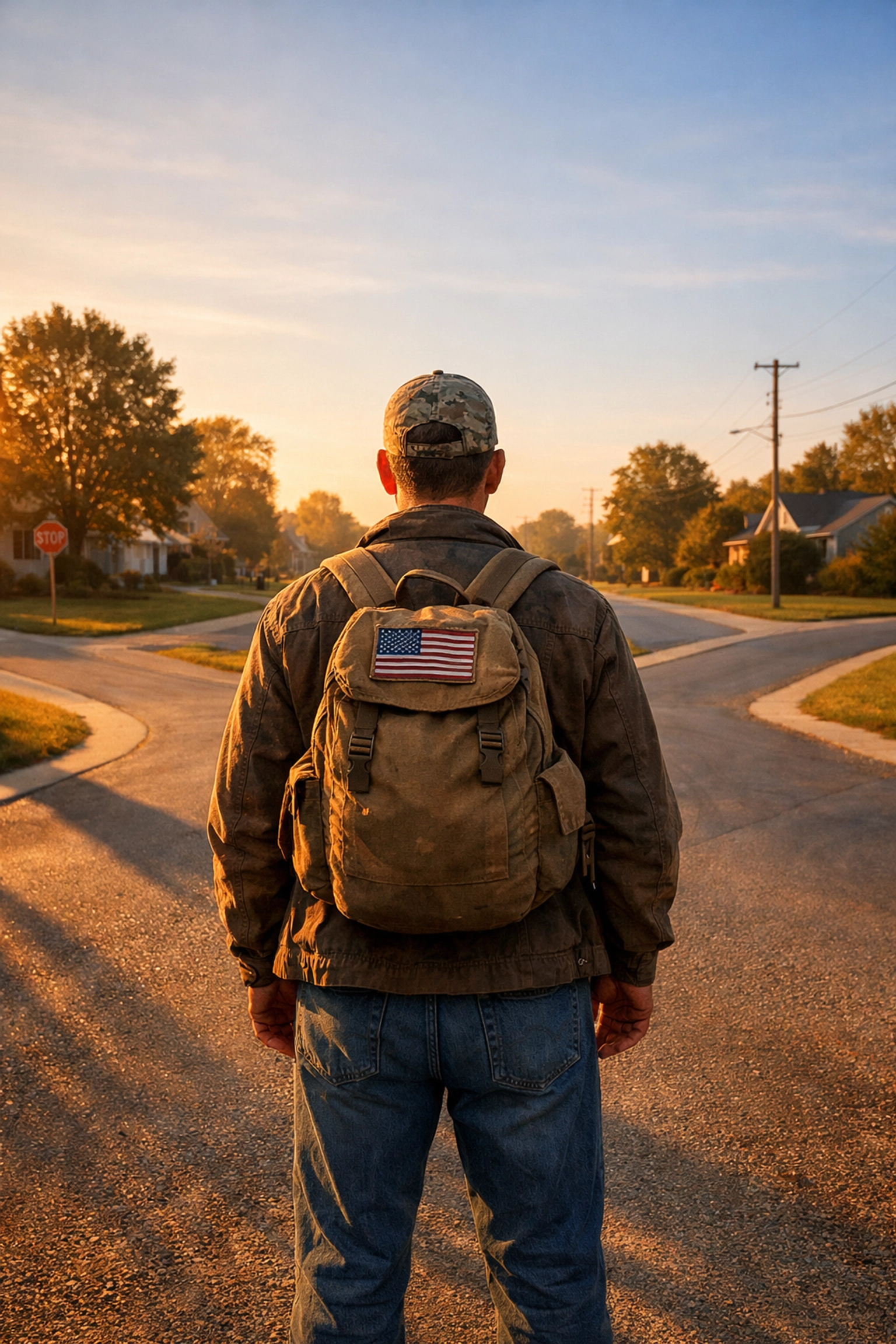
Here's what jumped out:
- Veterans with a smooth social and vocational transition (stable employment, solid finances, strong social connections) had significantly lower rates of depression and anxiety years later, even during high-stress periods like the pandemic or economic downturns.
- Veterans who struggled early on but connected with the right veteran transition programs, peer support, or mental health resources showed dramatic improvement. By year 5, their mental health outcomes were statistically identical to the "smooth transition" group.
- Veterans who isolated or avoided seeking support had the worst long-term outcomes, not because they were weaker, but because they didn't have the infrastructure to weather the inevitable storms that come with civilian life.
The takeaway? Your transition isn't a one-time event. It's the foundation for everything that comes after.
The "Improvers": Proof That Struggling Early Doesn't Mean You're Done
This is the part of the study that honestly made me want to call every veteran I know.
The researchers identified a group they called "improvers", veterans who had a rough start (unemployment, financial stress, social isolation) but eventually found footing. Maybe they connected with a peer support group. Maybe they enrolled in a structured program like Reboot Trauma Recovery. Maybe they just finally asked for help.
Whatever the path, these improvers caught up. By year 5, their mental health scores looked almost identical to veterans who never struggled in the first place.
That's not just encouraging, it's proof that the timeline matters less than the trajectory.
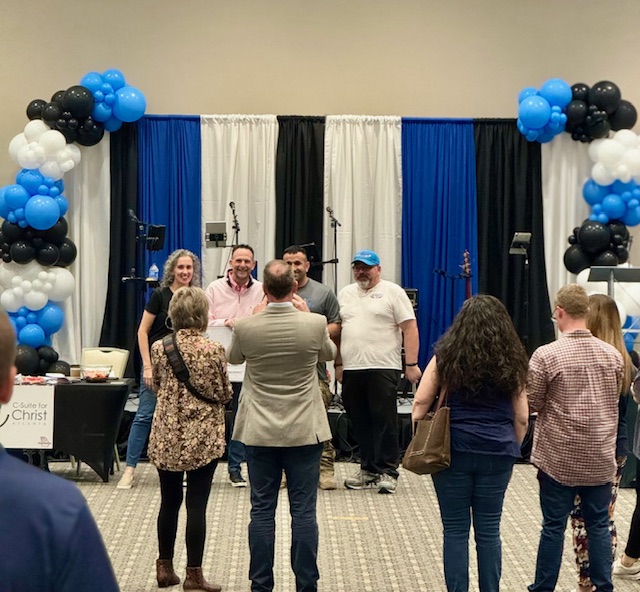
You don't have to "nail it" on day one. You just have to be willing to course-correct when things aren't working.
Why This Matters for Your Life Right Now
Let's get practical. If you're reading this and you're:
- 6 months out and feeling like you're drowning in applications and rejection emails
- 3 years out and realizing the job you took isn't fulfilling and you're starting to feel the weight of isolation
- 10 years out and wondering why you still feel disconnected from civilian life
This study says: You're not broken. You're just missing the infrastructure.
The study showed that what protects mental health long-term isn't perfection. It's three core pillars:
- Vocational stability – Not just any job, but work that feels meaningful and uses your skills
- Financial security – Enough breathing room to not live paycheck-to-paycheck
- Social connection – A tribe that gets it. People who've walked the same road.
Notice what's not on that list? "Figure it out alone." "Tough it out." "Just be grateful you made it home."
What a "Smooth Transition" Actually Looks Like
Here's the thing: most people hear "smooth transition" and think it means landing a six-figure job on day one, buying a house, and immediately fitting into suburban life like you never wore a uniform.
That's not what the data shows.
A smooth transition means:
- You have a plan (even if it changes)
- You're connected to people who've done this before (peer support, mentorship, veteran transition programs)
- You're not afraid to ask for help when something's not working
- You're proactive about mental health (not waiting until you're in crisis to reach out)
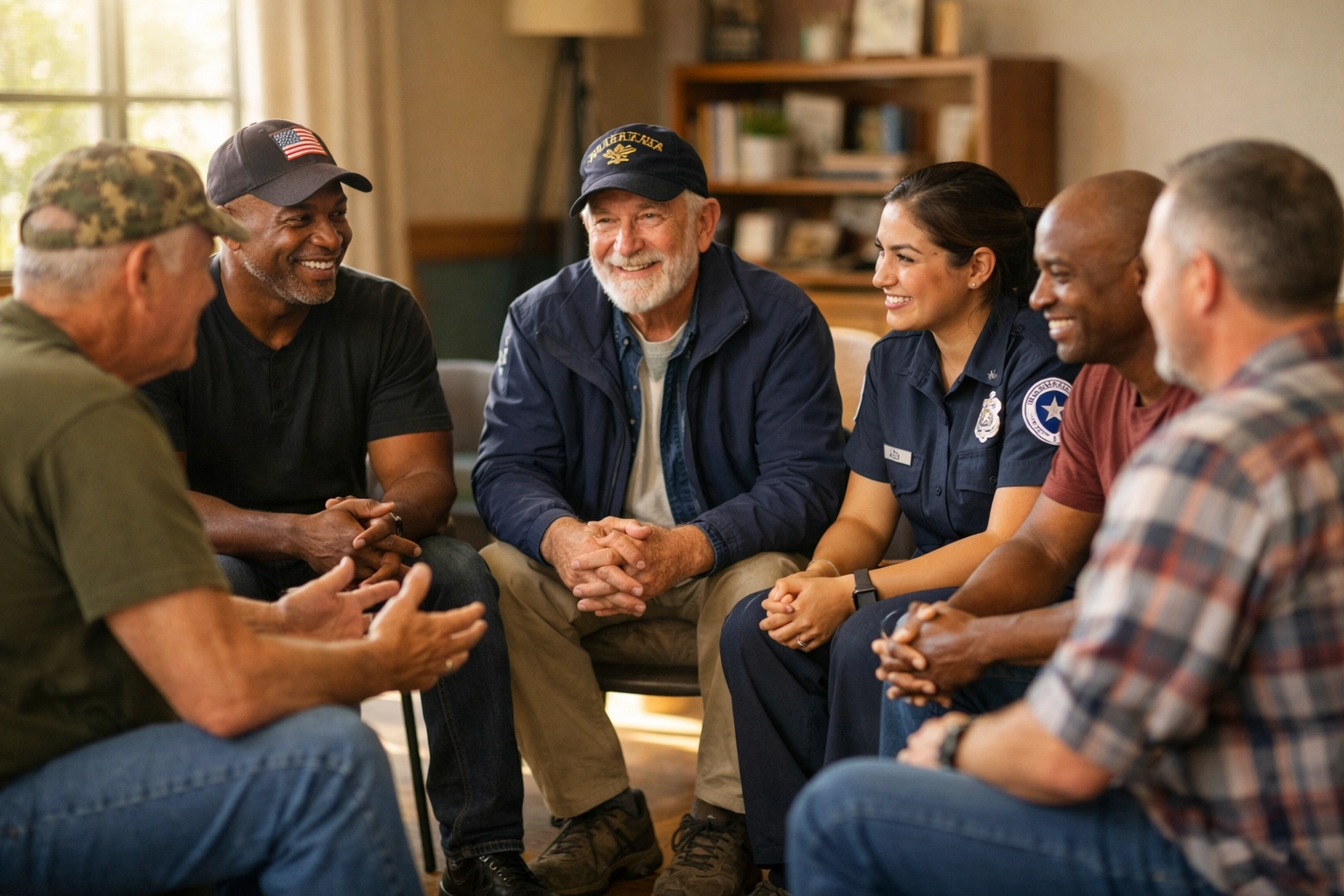
It doesn't mean you don't struggle. It means you don't struggle alone.
At Outer Circle Foundation, we see this play out every week. Veterans and first responders who come into our programs aren't "broken", they're just trying to rebuild without a blueprint. Once they're connected to a tribe, once they have a structured path (like our 12-week Reboot Trauma Recovery program), once they realize they're not the only one feeling this way, everything shifts.
The Science Behind the "Protective Shield"
The researchers used the phrase "protective shield" to describe what a solid transition does for your mental health.
Here's how it works: when you have stable employment, decent finances, and a strong social network, you build resilience reserves. When life throws something at you, job loss, relationship stress, health issues, a pandemic, you have a cushion. You have people to call. You have a foundation that doesn't crumble at the first hit.
But when you're already living on the edge, financially stressed, isolated, stuck in a job you hate, every new stressor becomes a crisis. You don't have the margin to absorb it.
That's why the transition phase is so critical. It's not about perfection. It's about building a base that can hold you up when life gets hard.
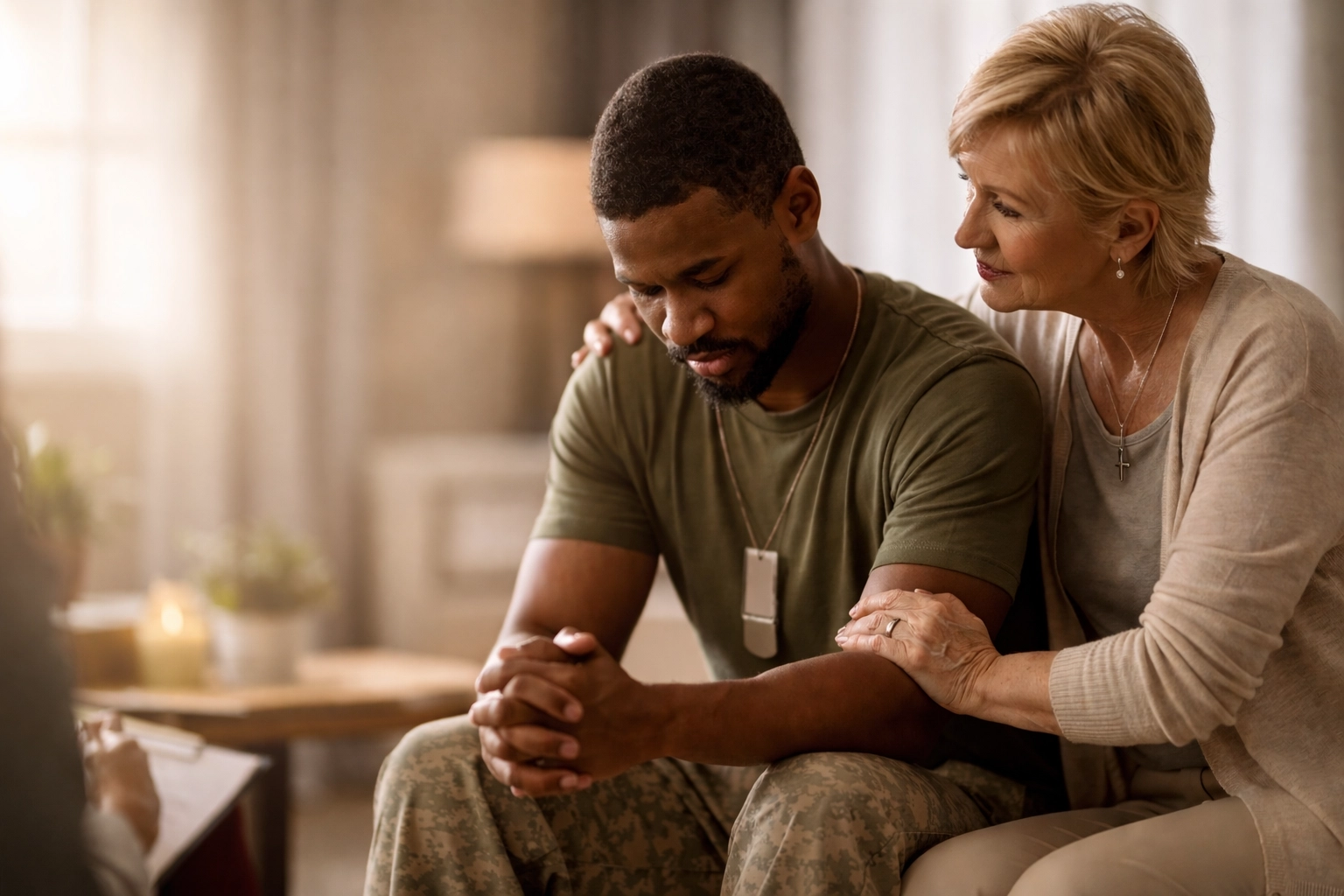
And life will get hard. That's not pessimism, that's just being human.
What You Can Do Right Now
If you're reading this and thinking, "Okay, I get it: but what do I actually do?": here's where to start:
1. Assess where you are honestly.
Are you employed, but miserable? Financially stable, but isolated? Check in with yourself. This isn't about judgment: it's about data.
2. Connect with people who've been there.
Join a peer support group. Reach out to veteran transition programs. Don't try to reinvent the wheel when someone else has already mapped the road.
3. Invest in your mental health now: not later.
The study proves that early intervention matters. You don't have to be in crisis to reach out. In fact, the best time to build your support network is before you need it.
If you're struggling, we're here. Outer Circle Foundation offers the Reboot Trauma Recovery program (a 12-week structured path), peer support, and mental health resources for veterans and first responders. We're not clinical counselors, but we're a bridge to the resources you need: and a tribe that gets it.
If you're in immediate crisis, call or text 988. If it's an emergency, call 911.
4. Give yourself permission to course-correct.
If you've been out for 3 years, 5 years, 10 years: and something's not working: it's not too late. The "improvers" in this study proved that. You can still build the foundation. You can still find your tribe.
The Bottom Line
Your transition isn't just about landing on your feet. It's about setting yourself up for the next 20 years.
The good news? You don't have to get it perfect. You just have to be willing to invest in the three pillars: meaningful work, financial stability, and social connection.
And if you're struggling right now, that doesn't mean you're behind. It just means it's time to ask for help.
We've spent our careers showing up for other people. It's time to let other people show up for us.
Ready to take the next step? Check out Outer Circle Foundation's programs or explore our career transition resources. You don't have to do this alone: and the data proves that when you don't, you set yourself up for a stronger, healthier, more connected future.
The long game starts today.