Every year, roughly 200,000 service members hang up the uniform and transition back into civilian life.
Most of them are told the same thing: Fix your resume.
They are told to translate military jargon into corporate-speak. They are told to optimize their LinkedIn profiles. They are told that if they can just "sell themselves" to a recruiter, they will be fine.
Here is the truth: A perfect resume won't save a veteran who has lost their sense of purpose.
Transitioning isn’t just about finding a job. It’s about finding a "new mission." When a veteran loses the structure, the brotherhood, and the clear objective of military service, they don’t just lose a paycheck. They lose their identity.
At the Outer Circle Foundation, we see the fallout of this every single day. We know that without a mission, the "invisible wounds" of service start to bleed.
If we want to actually support our veterans, we have to stop treating career transition like a paperwork exercise and start treating it like a life-saving mission.
The Resume Trap: What the Experts Got Wrong
For decades, career transition support has focused on the tactical. How do you dress for an interview? How do you explain that you led a platoon instead of "managing a team"?
But the data is finally catching up to what veterans have known all along.
The Veterans Metrics Initiative (TVMI), a landmark study led by Dr. Dawne Vogt involving 9,566 veterans, uncovered a staggering reality. The study followed these men and women for three years post-separation.
The findings? Community connection is a more significant factor in transition success than resume quality.
Read that again.
It doesn’t matter how many keywords you have in your bullet points if you are isolated. It doesn’t matter if you have a Master's degree if you feel like you no longer have a "why."
The TVMI study confirmed that veterans who maintained strong social bonds and felt connected to a community were significantly more likely to find meaningful employment and: more importantly: maintain their mental health.
It’s not about what you know. It’s about who has your back.
Why the "Mission" Matters
In the military, the mission comes first. It provides clarity. It provides a reason to wake up at 0400. It provides a framework for every decision you make.
When you transition, that mission vanishes. Suddenly, you are expected to find "career satisfaction" in a cubicle. For many, this feels hollow. It feels like a downgrade.
This is why so many veterans struggle with mental health during the first two years of civilian life.
Without a mission, you aren't just unemployed or underemployed: you are adrift. This lack of direction is a primary driver of the veteran transition mental health impact that we see across the country.
To change the way we approach career support, we must help veterans identify a New Mission.
This isn't just about a job title. It's about finding a way to serve, lead, and contribute that resonates with the values they lived by in uniform.
The Three Pillars of a Successful "New Mission"
At Outer Circle Foundation, we believe that your next mission depends on three specific things:
- Purpose over Paycheck: A job pays the bills, but a mission fuels the soul. We help veterans find roles where their leadership and values are actually utilized, not just tolerated.
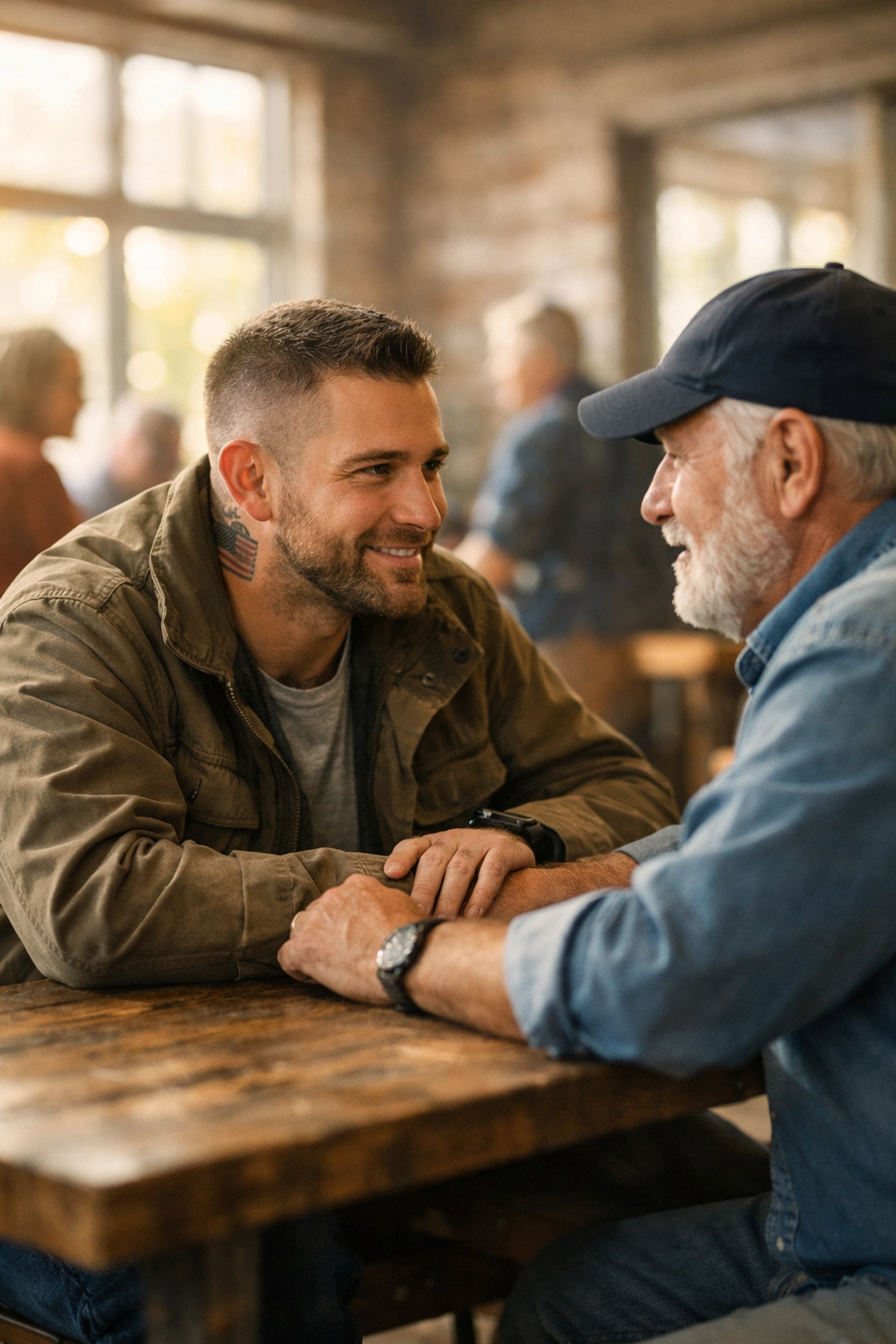
- The "Unit" Mentality: Transitioning veterans often feel like they are "one of one" in a civilian company. They need a new unit. They need a community that understands the weight they carry.
- Holistic Support: You cannot focus on a career if your mental health is failing. We bridge the gap between career services and mental health support.
Myth: You have to do this alone to prove you’re "civilian ready."
Truth: Isolation is the enemy. Asking for help is a tactical advantage.

How Community Connection Outperforms a CV
Why did Dr. Vogt’s study find that community was the "secret sauce"?
Think about the military. You never went on a mission alone. You had a team, a medic, a radio operator, and a chain of command.
The civilian world tells you that career transition is an individual sport. It’s not.
Community connection provides:
- The "Vouch": Someone who knows your character and can open a door that a resume can't.
- The "Safety Net": People who notice when your "I'm fine" actually means "I'm drowning."
- The "Mirror": A group that reminds you of your value when you feel like your skills don't translate.
When we focus solely on resumes, we are essentially giving a soldier a map but no compass. Community is the compass.
We Are Losing the War on the Homefront
We need to talk about the stakes.
We know the statistics. We lose 22 veterans a day to suicide. That is a national tragedy. And while there are many factors involved, the loss of purpose and the feeling of isolation during career transition are massive contributors.
We’ve written before about suicide prevention for veterans and the warning signs that are often missed. One of the biggest signs is a veteran who has "given up" on the job hunt: not because they are lazy, but because they have lost hope that they will ever find a place where they belong again.
We cannot let them walk that path alone.

The Outer Circle Foundation Mission
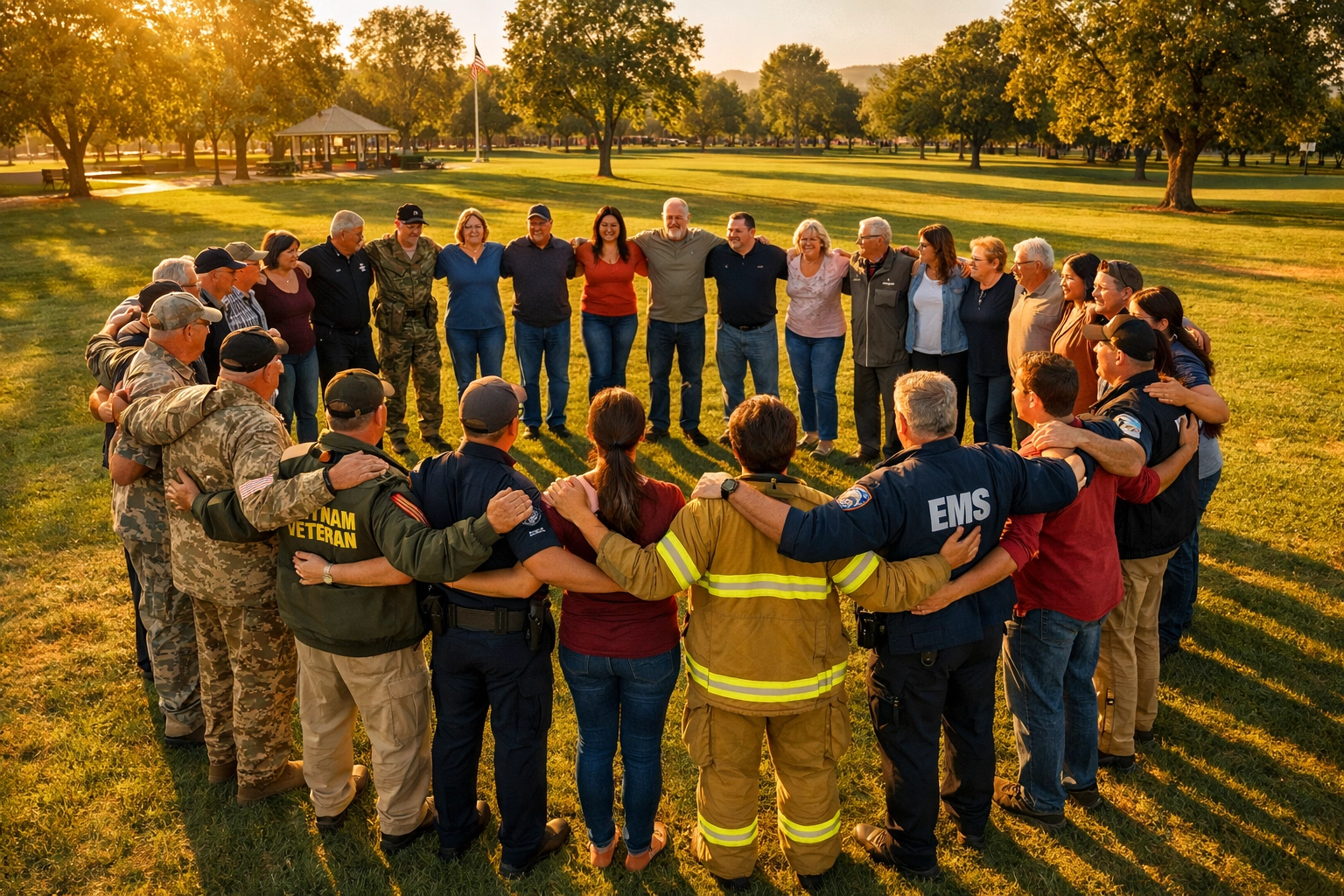
Our name comes from the idea of the "Outer Circle": the support system that surrounds our heroes when they come home.
We don't just want to help you find a job. We want to help you find your way back to yourself.
We provide:
- Peer-to-peer support that prioritizes connection over clinical checklists.
- Specialized programs like equine and art therapy to process the trauma that traditional "talk therapy" can't always reach.
- A network of veterans and first responders who have walked the path and are ready to pull the next person up.
We aren't just a non-profit. We are a community. And we are on a mission to ensure that no veteran feels they have to fight their "new mission" solo.
How You Can Change the Narrative
If you are a veteran reading this: Stop obsessing over the resume.
Start reaching out. Find your circle. Your skills are needed, your leadership is vital, and your story isn't over. It’s just starting a new chapter.
If you are a civilian, a donor, or a supporter: We need your help to fund these connections.
Resumes are cheap. Community building is hard. It takes resources to provide the mental health services, the peer support groups, and the specialized therapy programs that actually make a difference.
Direct donations to the Outer Circle Foundation go toward:
- Providing free mental health counseling for veterans in transition.
- Hosting community events that foster the connections Dr. Vogt’s study proved are essential.
- Ensuring that when a hero reaches out, there is always someone on the other end of the line.
Join the Mission
The transition from service to civilian life is the hardest mission many will ever face. But it’s a mission that can be won.
We have the data. We know that community connection is the key. Now, we just need the will to support it.
You are not alone. You are still a hero. And you still have a mission.
Whether you need support or you want to provide it, we invite you to join us. Let’s stop talking about resumes and start talking about lives.
Support our mission today. Your donation saves lives.
Click here to support the Outer Circle Foundation
If you or a loved one are struggling, don't wait. Reach out. For more resources on navigating life after service, check out our guide on 10 things to know if your loved one has PTSD or explore our self-care tips for first responders.